Grooming
Brush two or three times weekly to keep the beard and leg furnishings free of mats. Professional grooming every six to eight weeks — clipped or hand-stripped. Budget for it before you commit; it is a recurring cost for the life of the dog.
Breed guide
A working farm terrier in a twelve-inch package: bright, sturdy, opinionated and funny. Here is the honest version, including the parts that make people choose a different breed.
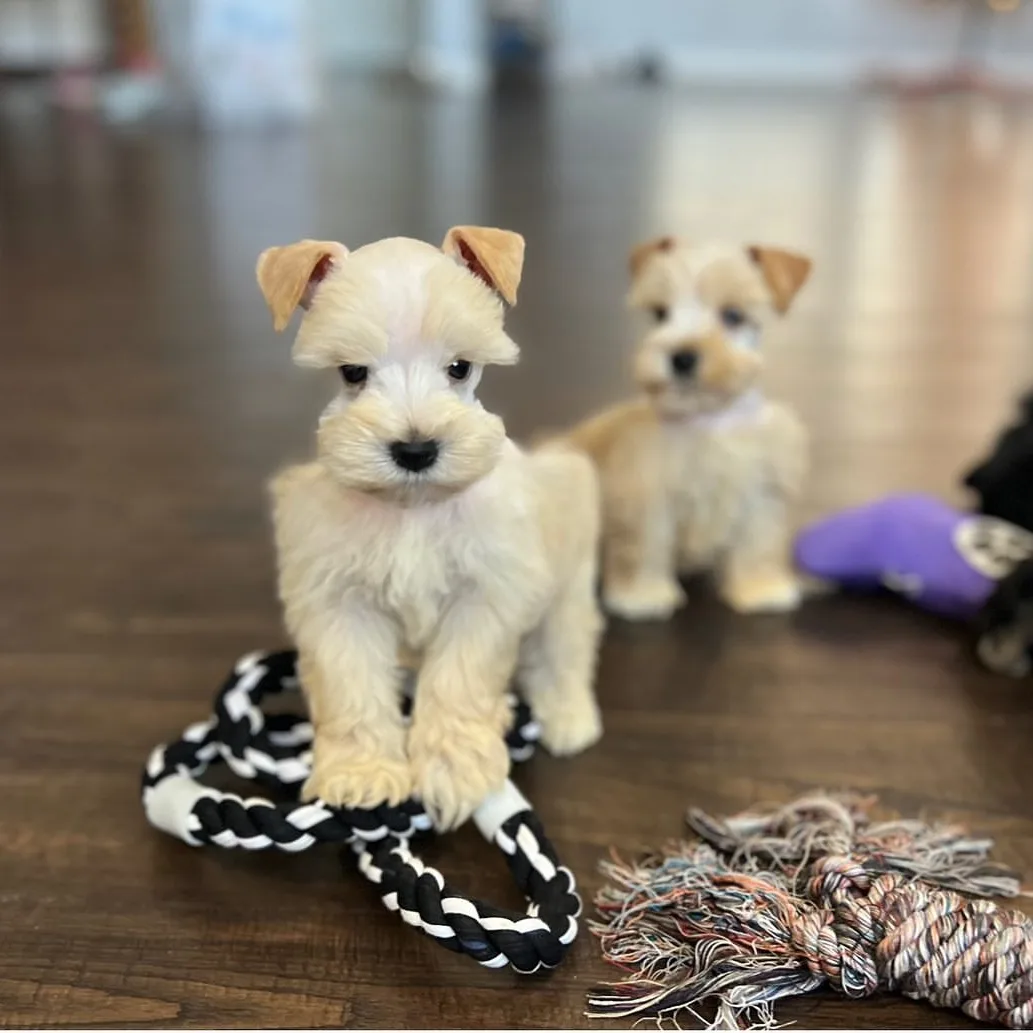
Figures are the widely published breed ranges for the Miniature Schnauzer. Individual dogs vary, and your own veterinarian is the authority on your dog.
Character
The breed was developed on German farms to control vermin and to alert the household — two jobs that require confidence, independent decision-making and a loud voice. Every endearing trait and every irritating one traces back to that.
They attach hard and stay close. A Miniature Schnauzer typically wants to be in the room you are in, participating in whatever is happening, with opinions. They travel well, adapt to routine quickly, and are small enough to be practical without being fragile.
The alertness. This is a dog that will tell you about the postman, the neighbour's car and a leaf moving unexpectedly. Training shapes it into something manageable; nothing turns it off. Also the grooming: the beard and furnishings that make the breed instantly recognisable are a standing commitment, not a one-off.
Independent, persistent and perfectly willing to decide that your recall is a suggestion. Off-lead reliability in an unfenced space takes real work and is never guaranteed with a scent in the air.

Everything charming about the breed and everything difficult about it come from the same place.
Living with one
Brush two or three times weekly to keep the beard and leg furnishings free of mats. Professional grooming every six to eight weeks — clipped or hand-stripped. Budget for it before you commit; it is a recurring cost for the life of the dog.
Two walks a day plus play. They are game for far more — hiking, long walks, scent games — but they are not a breed that needs to run for hours to be content.
Short, varied, reward-based sessions. Start recall, loose-lead walking and settling on day one. Enrol in a class not because the dog is difficult but because you will both learn faster with help.
Keep going after homecoming. The critical window does not close the day the puppy arrives; new people, surfaces, sounds and calm dogs through the first year pay dividends for a decade.
A measured, consistent diet. This breed is predisposed to raised blood lipids and to pancreatitis, so fatty table scraps are a genuinely bad idea rather than a mild indulgence. Ask your vet about diet specifically.
Annual examinations, dental care, parasite prevention and vaccination as advised by your own veterinarian. Pet insurance is worth pricing in the first week, before anything is a pre-existing condition.
Likely a good fit
Consider another breed
Responsible ownership
01
Who is at home, and when? A ten-week-old puppy cannot be left for a working day, and an adult should not be either. Be specific rather than optimistic.
02
Food, grooming, vaccination, annual veterinary care, parasite prevention, training, insurance, boarding and an emergency fund. The purchase price is the smallest number in the dog's life.
03
Stairs, secure outdoor space, noise tolerance, children, existing pets, and whether your tenancy actually permits a dog in writing.
04
Identify a veterinarian, a groomer and a trainer before the puppy arrives. Booking the first vet appointment in advance is a condition of the health guarantee anyway.
05
Career changes, moves, new babies, aging parents. The most common reason dogs are rehomed is not behaviour — it is a change in circumstances nobody planned for.
Breed questions
Then the next question is which individual puppy suits your household — and that is a conversation, not a checkout.