Puppy development

Ten weeks, week by week

What is actually happening inside a puppy between birth and homecoming — and why two extra weeks makes more difference than almost anything else a breeder can do.

Three Miniature Schnauzer puppies together in the grass

The timeline

Birth to going home

Birth — day 1

Entirely dependent

Puppies are born with eyes and ears closed. They cannot regulate their own temperature and navigate by warmth and smell alone. The priorities are the dam's comfort, a clean whelping area, and daily weight checks — a puppy failing to gain is the earliest warning sign there is.

Days 2–13

Growth and quiet

Sleeping and feeding, almost exclusively. Very brief, gentle handling begins. Interference beyond that is counterproductive; the most useful thing anyone can do in this fortnight is watch closely and leave well alone.

Weeks 2–3

Senses switch on

Eyes open around day ten to fourteen, hearing shortly after. Puppies begin to stand, then wobble, then walk. The first startle responses appear, and the first opportunities to teach a puppy that surprises are survivable.

Weeks 4–5

Weaning and littermate lessons

Solid food is introduced alongside nursing. Play with littermates begins in earnest — and with it bite inhibition, the single most valuable lesson a puppy learns, taught by siblings who yelp and walk away. No human replicates this well, which is one reason puppies removed too early struggle.

Weeks 6–7

Foundations

First veterinary attention. First deliberate crate exposure. Different surfaces underfoot, household appliances, visitors, being carried through doorways. Individual differences in confidence become genuinely visible for the first time.

Weeks 8–9

Independence

Confidence away from the litter grows quickly. Toileting patterns firm up given a consistent routine. This is the age at which most programmes send puppies home.

Week 10

Ready to travel

Two further weeks of routine, correction and exposure. A ten-week-old puppy handles a car journey, a flight and a first night in a strange house measurably better than an eight-week-old. That is the whole argument, and it is why we wait.

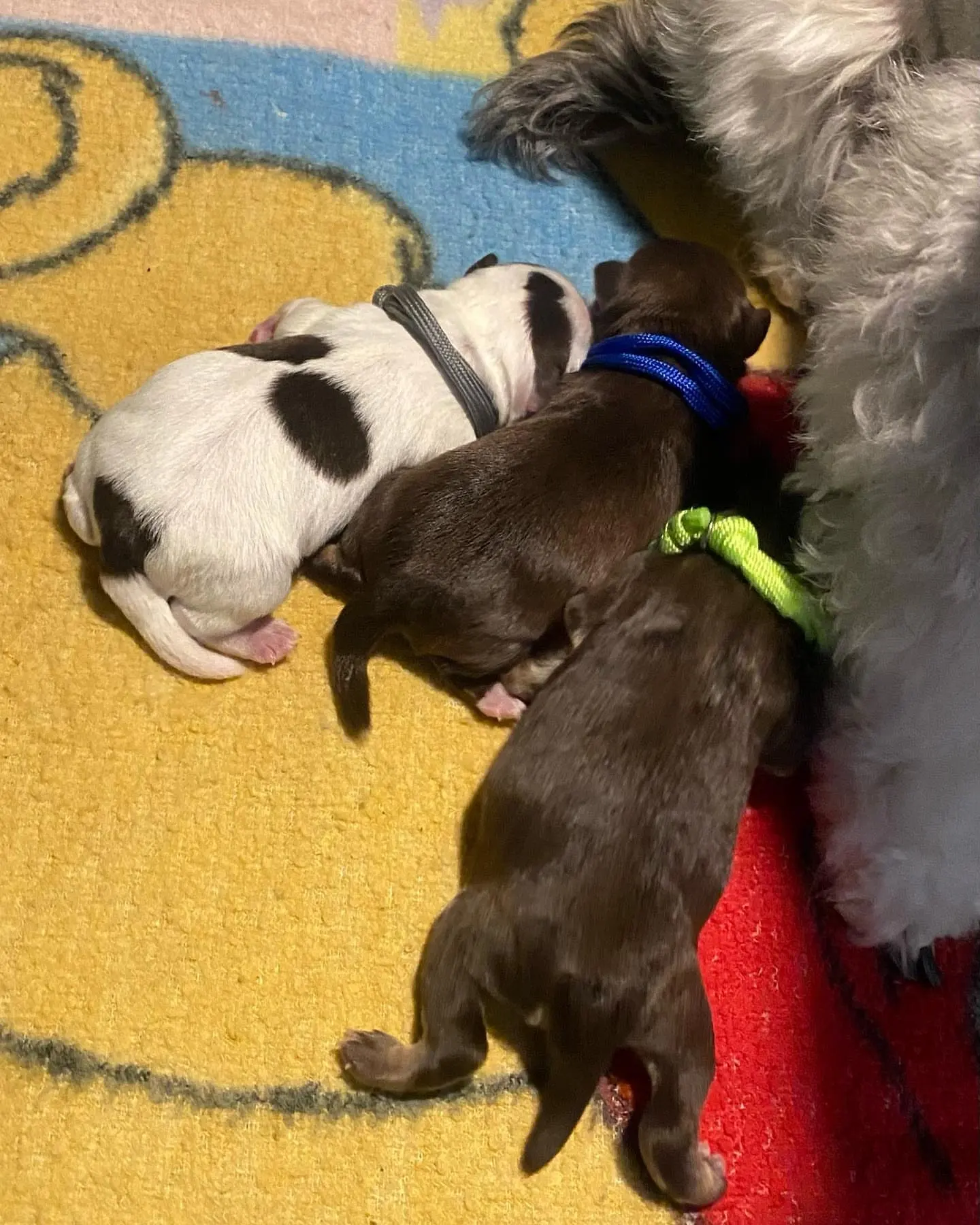
Newborn Miniature Schnauzer littermates side by side
A note on eight weeks

Eight weeks is a legal minimum in many places, not a target. Where the law permits earlier separation, it is still a poor idea. Ask any breeder why their go-home age is what it is; the answer is informative either way.

Two ten-week-old Miniature Schnauzer puppies playing with a rope toy

Your turn

The first fourteen days at your house

The most common mistakes in week one are all versions of doing too much. Almost nothing is urgent.

Days 1–2

Quiet, small space, existing routine. Same food, same schedule, same crate habits. No visitors, no trips, no shopping expedition to show the puppy off. Expect a disrupted first night; it is normal and it passes.

Day 3 at the latest

The independent veterinary examination. This is a condition of the health guarantee and the window is 72 hours — book it before the puppy arrives, not after.

Days 3–7

Widen the world gently: one new room, one new surface, one calm visitor at a time. Start recall and name games indoors, thirty seconds at a time, several times a day.

Week 2

Toileting patterns settle if the routine is consistent. Book a puppy class. Book the first groomer appointment even if the coat does not need it yet — the point is that the puppy learns the place is boring.

Sleep

Puppies at this age need somewhere between sixteen and twenty hours a day. A puppy that is being 'naughty' in the evening is usually a puppy that has been kept awake.

When to call us

Immediately, about anything that worries you. Early questions are cheap; late ones are not. That applies to health, behaviour and the paperwork equally.

Ready to meet the litter?

17 puppies are available now, each with its own profile and its own photograph.