Our parents

The dogs behind every litter

Both parents live with us, in the same rooms as the puppies. They are chosen for temperament first, health screened before they are ever bred, and you are welcome to meet them when you visit.

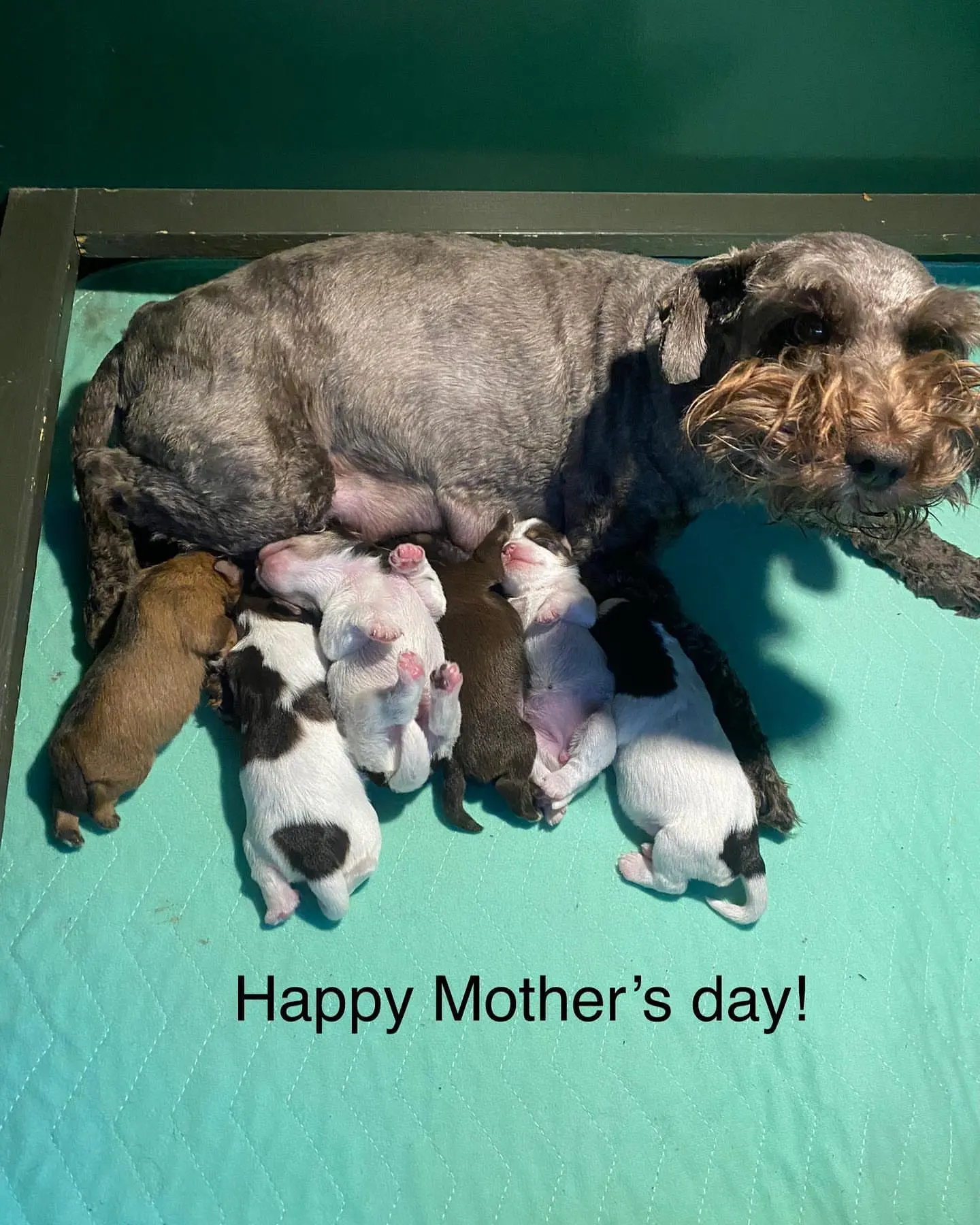
The dam resting with her litter

Our breeding pair

Temperament first, always

A nervous dog raises nervous puppies, however good its coat is. We would rather keep a steady dog with an unremarkable pedigree than a highly-titled one that cannot settle in a busy kitchen.

Dam

Our girl

Calm, patient and endlessly tolerant — exactly what you want in a mother. She raises confident litters because nothing rattles her, and the puppies take their cue from that from the first week.

Breed
Miniature Schnauzer
Lives
Indoors, with the family
Temperament
Settled, affectionate, unbothered by household noise
Health screening
Eyes, heart and breed-relevant panels before breeding
Registration
AKC registered

Sire

Our boy

Bright, sociable and steady with people of every age. He is the one who greets visitors first, and the litters consistently inherit that easy sociability.

Breed
Miniature Schnauzer
Lives
Indoors, with the family
Temperament
Outgoing, biddable, good with children
Health screening
Eyes, heart and breed-relevant panels before breeding
Registration
AKC registered
Come and meet them

Photographs only tell you so much about an adult dog. If you are collecting in person you will meet both parents, and if you are not, we will happily set up a video call so you can see them with the litter. Ask us — it is a normal request.

Health screening

What we screen for, and why

Miniature Schnauzers are a hardy breed with a handful of conditions worth screening in breeding stock. Here is what we check before a pairing, and what it means for the puppy you take home.

Health screening for our breeding pair
AreaWhy it matters in this breed
EyesHereditary cataracts and progressive retinal atrophy are recognised in the breed, so breeding dogs are examined by a veterinary ophthalmologist.
HeartAuscultation of both adults, with further cardiac assessment if anything is heard.
MetabolicThe breed is predisposed to raised blood lipids and to pancreatitis — which is why we send every puppy home with a feeding sheet rather than leaving diet to chance.
UrinaryA recognised tendency to form bladder stones. Worth discussing with your own veterinarian at the first appointment.
Genetic panelBreed-relevant DNA screening, which is inexpensive relative to the cost of a litter and tells you far more than a pedigree does.

General breed information, not veterinary advice for an individual dog. Discuss lifelong care with your own veterinarian.

Questions about the parents?

Ask anything — temperament, screening, how previous litters have turned out. We would rather over-share than leave you guessing.